Sunday, February 10, 2013

Lil Wayne - the man with the most entries on the Billboard Hot 100 chart


Early life
"I always believe that to be the best, you have to smell like the best, dress like the best, act like the best. When you throw your trash in the garbage can, it has to be better than anybody else who ever threw trash in the garbage can."
by Lil Wayne

In 1982, a future rap star born in New Orleans, Louisiana. Lil Wayne (Dwayne Michael Carter, Jr.) grew up in a divorced family with his 19 years old mother. His father abandoned the family after the divorce, which later on, Lil Wayne preferred people to call him Wayne instead of Dwayne because his father is not in his life and will never be. Harsh childhood encouraged Lil Wayne to be outstanding and unique. He recorded his first rap song at the age of eight and met rapper Bryan Williams to enlighten his music life. Lil Wayne decided to drop out of the school as he became a professional rapper. 

Music career in the '90s

"I'm not an example for how people should live their lives. Never in my life would I ever set out to be an example for people on how to live their lives. If you need an example for how to live, then you just shouldn't have been born. Straight up."
by Lil Wayne

Lil Wayne joined the Hot Boys in the age of fifteen as the youngest member in the group. He began his hip hop career with the Hot Boys and released many tracks that were voted to be on the Billboard Hot 100, which is considered pretty successful for a young teenager in his early music career. Several years after being a “rookie” in the rap industry, Lil Wayne’s first debut solo album, The Block Is Hot, was released when he was seventeen. The album was so popular that the Source magazine awarded Lil Wayne to be the “Best New Artist”. But unfortunately, Lil Wayne’s second and third albums did not reverberate the rap fans because the maturity and the quality of his rap songs still had not reached his fellow Hot Boys members…


Climax of his music career
"I don't think life is about a pace, living slow or fast. I think you just live, y'know what I mean?"
by Lil Wayne
In the summer of 2004, Tha Carter was released. Rap fans would say, by releasing this album, Lil Wayne became the musical fashion trend. Not only the unique vocal style, husky sounds, but also his now-signature outlook, the dreadlocks, became the new significant recognition of Lil Wayne and hip hop culture. Becoming a household rap star, Lil Wayne was named to be the president of Cash Money Records, a hip-hop record label founded in 1991. Despite how successful Tha Carter was, Lil Wayne reached his hip hop fans through mixtapes with other singers instead of follow up another solo album for the next two years. Between his two years musical life as a featured performer, Lil Wayne participated in many musical works that vocalized some social consciousness. For instance, the track “Georgia Bush” critiqued the former president’s responses to the disaster of Hurricane Katrina on the people of the United States. 
Personal life

"I like being misunderstood."
by Lil Wayne
In 2007, Lil Wayne was arrested because the police discovered him smoking marijuana near the bus station illegally and later on discovered a pistol in his bag. Lil Wayne was expected to receive a one-year jail sentence, but the decision was delay through his "teeth surgery" and the basement fire in the courthouse. In May 2010, Lil Wayne was sentence to a year in jail on Rikers Island. Despite of illegally possessing a weapon, smoking weed and cigarettes on one hand, is Lil Wayne’s own willingness, but on the other hand, smoking could also put certain amount of pressure on his channel that auto-tunes his voice naturally. Smoking makes Lil Wayne’s rap unique. People might argue his imprisonment of doing drugs is what he deserves, but on the contrary, isn’t smoking somehow makes Lil Wayne’s rap so perfect and unique because of his husky and raspy voice? 


Down fall of Lil Wayne

"Honestly, I don't listen to nobody else's music but my own. It's kind of like sports to me. You don't see Kobe Bryant at a LeBron James game - he just works on his own game. And that's what I do. I only listen to me, so I can criticize and analyze and all those things."
by Lil Wayne


It is impossible to watch Youtube videos without seeing the comment “This is better than Lil Wayne” now a day. People might say: “obviously, Drake is always better than Lil Wayne, but how in the world can Lil Wayne gets more shit than any hip hop singers can?” For a rapper who had his debut album at the age of 17, Lil Wayne is often overlooked by the people as a significant element of modern hip hop. People believe Lil Wayne is no longer able to produce rap songs like “lollipop” or “A Milli” because people expected from him too much after his incredible mixtape albums like Tha Carter III, but when we listen carefully to his current rap songs, that energetic and unique rhythm is still there. We can say that people are no longer interesting on worshiping Lil Wayne, but we can never deny his contribution to the hip hop world. 

Lil Wayne - 6 foot 7 foot ft. Cory Gunz


Lil Wayne - Lollipop ft. Static


Saturday, February 9, 2013

Spread Love, It's the Brooklyn Way

However livin' better now, Coogi sweater now

Christopher Wallace [The Notorious B.I.G./The King of New York/Biggie Smalls/Big Poppa] 
was an American rapper born to Voletta Wallace, a preschool teacher, on May 21st, 1972, in the poor Brooklyn neighborhood of Bedford-Stuyvesant. In his early years – though interested in the ever-growing culture of music and rap – Chris Wallace worked hard in the classroom. As a young boy, Wallace dreamt of becoming a graphic artist and was an honor student. Years later, when asked, his mother recalled having “the awards to prove it.”
                Though always having been a good student, Chris Wallace loved rapping and had been partaking in the rap culture since a young age. Continuing to rap with local groups like the Techniques and the Old Gold Brothers, Chris Wallace, being 6 foot 3 inches tall and weighing in around 400 pounds, cleverly adopted the name “Biggie Smalls” before later realizing the name “Biggy Smalls” was already in use. Rapping went hand in hand with exposure to the harsh life of the streets of Bed-Stuy. As Chris reached his teenage years, he became almost infatuated with the money and flashy lifestyle of the local drug-dealers. Although a good student, he dropped out of school (Wallace attended the same high school at the same time as Jay-Z and Busta Rhymes) at the age of seventeen to live a life on the streets. Immediately after leaving his earlier life behind, Chris Wallace became a crack dealer. Wallace’s crack-dealing career was short lived, as he was arrested on a trip to North Carolina in 1991 and spent a total of nine months in jail. Nine months later – from that North Carolina jail cell – one of the greatest rappers of all time was born.
                Upon his release, Wallace borrowed a friend’s four-track tape recorder and laid down some tracks he had written in his head while incarcerated. After this, the tapes were then passed around to, and played, at local radio stations. Sean Combs [Puffy] was sent a copy of the tape and upon hearing, he said, “I just kept rewinding and rewinding it. I had to meet him.” Shortly after meeting him, Puffy signed Christopher Wallace to Bad Boy Records and, without delay, began putting him on other artists’ tracks in an attempt to get his sound heard.
                Christopher Wallace was a huge success. The Notorious B.I.G.’s debut album, ironically named “Ready to Die,” was an enormous success due to Wallace’s ability to give the listener an honest, first-person look into his material. Wallace’s songs are often talked about as semi-autobiographical narratives with finer writing and a cinematic style that is still talked about today as something that all together changed hip-hop. The people of RapGenius credit the Notorious B.I.G., (and especially "Ready to Die") along with the Wu Tang Clan, and Nas, to the beginnings of the Modern Era of Rap.

“Juicy,” a song Wallace originally contemplated releasing without the skit at the beginning, went gold within weeks and was a Billboard Top 5 Rap Single. The skit at the beginning of “Juicy” is a prime example of Wallace’s ability, as an artist, to command the listener’s attention by rapping in a cinematic fashion.

“Yeah, this album is dedicated to all the teachers that told me I’d never amount to nothin’,
to all the people that lived above the buildings I was hustlin’ in front of that called the police on me
when I was just tryna make some money to feed my daughters, and all the niggas in the struggle.”

This lyric, though simple to most, is easily the most famous and thought-provoking. 


"We used to fuss when the landlord dissed us. No heat, wonder why Christmas missed us. 
Birthdays was the worst days, now we sippin' champagne when we thirst-ay. 
Uh, damn right I like the life I live, cuz I went from negative to positive."

Lines like these make it easy to understand the greatness so many people saw, and still see, in the Notorious B.I.G. Anyone can rap about the struggle they come from and even make a listener feel bad for them. Biggie both pulls at heart strings and cleverly makes the listener aware. When he was young, birthdays weren't anything to look forward to...you made it another year in the hood, but you still had no way of celebrating. Now, going "from negative to positive," instead of drinking champagne - a more celebratory beverage - on special occasions, Wallace can now afford to drink champagne whenever he's thirsty.

Super Fly Dirty Dirty: Big K.R.I.T.'s career in music

            Justin Scott, better known as Big K.R.I.T (King Remembered in Time), embodies a dirty south rapping style that has garnered acclaim from both critics and fans alike. Hailing from Meridian, Mississippi, K.R.I.T stays true to his roots with tracks like "Country shit" and "cool to be southern," all the while though, KRIT maintains a certain level of lyrical value and content throughout most of his discography. His focus on content though, does not at all take away from his crazy, bass-ridden, live sets.                                  

           At 26 years old, KRITs been on the rap scene for about eight years, starting to gather critical acclaim with his first major mix tape, K.R.I.T. wuz here. Released in 2010 the mix-tape got KRIT a deal with renowned label, Def Jam records. Following his signing with the label, KRIT went on his first major tour, The Smokers Club Tour along with fellow rappers, Curren$y and Smoke DZA. Keeping his career rolling, XXL featured him as one of their "Top Eleven Freshmen of 2011," standing among current stars like Kendrick Lamar, and (not actually good, but still a "star") Mac Miller, KRIT's rapping seemed to be taking him places.


Growing up in a place pretty much as southern as it gets, KRIT's environmental and cultural influences were certainly a little different from his north-east coast and west coast peers. Indeed, when asked about the state of hip-hop in Mississippi during an interview for Complex magazine, KRIT responded:

"We haven't had a large presence in hip-hop, so to try to get people to listen to where we come from and try to tear down the stereotypes that people may have about our state and our lingo is difficult. Again, being from a small town, it's not like people don't believe in you, but it just might not seem possible, so you have to get out of that mind-frame and know you can do things and succeed."     -Big K.R.I.T.

Fellow Mississippi rapper David Banner, showed KRIT that breaking out of small town southern life for rappers with aspiration was a possibility. Musical influence wise as well, KRIT was different than a lot of his counterparts. While many young, up-and-coming artists look to New York staples like Rakim, Nas, and Jay-Z and west coast icons like Dre and Snoop, KRIT recalls the 1990's Southern hip-hop of Pimp C and 8Ball, rappers who casually include lyrically intricate rhymes, but seem more interested in mood than density, so KRIT soon developed a style more similar to his southern predecessors.

When KRIT was just starting out, he was "young and couldn't afford to pay for beats." To combat this, KRIT taught himself to produce, giving himself an appreciation for both sides of the hip-hop genre. Producing taught KRIT to appreciate the importance of beats, samples, and what goes into them. Like many producers during the early days of hip-hop, as well as some current ones, KRIT's samples are often the music of his parents. In fact, KRIT said in response to that very question, (whether the music his parents listened to affected his production choices)

"Yeah, no doubt. I just recently got a turntable and I got mad vinyl and I got stupid excited because there is stuff that people haven't tapped into. It was a different type of game back then and a different type of feel for music. Live bands sang mostly about what they went through and not so much for the money, but that they are recording and love doing what they are doing. It comes off better when you can rap over that type of vibe and that type of feeling; that's why I really like making soul sample-type records."    -Big K.R.I.T.

KRIT, like many in early hip-hop and the G-funk era, uses particular samples to bring a certain vibe to his music. He calls on the somewhat historic music of his parents lifetime in order to relay the same message in the form of southern, often "soul-sample type" hip-hop records. Through his lyrics as well as his samples and beats, KRIT brings value to his tracks, in an interview with pitchfork music, KRIT said, "I think its most important that I have subject matter and content in my music, something that'll outlive all my crunk hits, all my party records."

With the release of his mix-tape Return of 4Eva in March of 2011, KRIT really brought himself into the hip-hop spotlight. The mix-tape immediately garnered critical acclaim from multiple sources. Popular hip-hop magazine HipHopDX said the KRIT gave away "a free album," the highest praise for a mix-tape. Pitchfork reviewed the mix-tape, giving it an 8.2 out of ten and the coveted title of "Best New Music." To make the mix-tape all the more impressive, it was entirely self produced. Following the fame gained from the mix-tape, KRIT announced that he would be joining "The Smoker's Club Tour 2011" for a second time, this time touring along side returning member Curren$y and Method Man of Wu-Tang Clan fame.

All of KRIT's previous mix-tapes led to the release of his first studio album. Made with both Def Jam Records and Cinematic Music Group, Live From the Underground dropped to high critic and fan praise. The album debuted number 5 on the US Billboard 200 and Spin magazine named it the 11th best hip-hop album of 2012. Overall the album maintained astoundingly well KRIT's "underground" sound, and impressed fans by maintaining the same southern flair throughout its lyrics, beats, and samples. The tracks off Live From the Underground have the same bass-heavy beats and soulful background harmonies. Sometimes from instruments you wouldn't expect compliment KRIT's comfortably relaxed delivery of verses as well as the oftentimes somewhat repetitive hooks. Even the repetitive hooks though serve a purpose, for while a repeated "Fuck these haters and fuck these hoes" or  "When I show up, Its over" may take away from a peaceful album listening, they certainly add to KRIT's ability to hype a crowd. KRIT's definitely made a name for himself recently with his new album, and announcements of another to come. With his Southern flair and sometimes thought-provoking, sometimes party-starting content, Big K.R.I.T. is only seeing the beginning of his career in the hip-hop industry.


Thursday, February 7, 2013

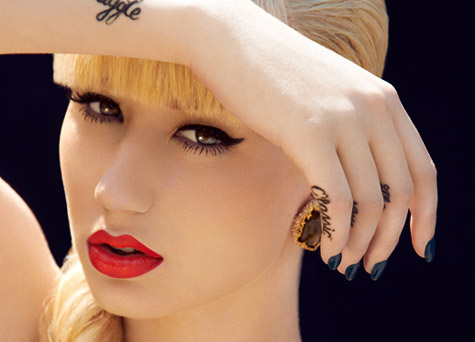
Iggy Azalea: A Blooming Hip Hop Flower to Look Out For

Iggy Azalea: A Blooming Hip Hop Flower to Look Out For


    Early Years


        Iggy Azalea (Amethyst Amelia Kelly) started rapping at age fourteen, when she and her neighbors started a group together. From the get go, Iggy Azalea was a determined female, embracing the competitive nature of the hip hop world. In fact, she left the rap group with her friends because she felt the others did not take the project as seriously. At age fifteen, Iggy Azalea took her aspiring dream to be a rapper into her own hands. The artist dropped out of high school to clean houses with her mother in order to save and earn money to move to the United States and pursue her rap career.  Once she procured enough money to travel to the U.S. ,  she lied to her parents, telling them that she was going on a vacation with her friend. Upon arrival, she phoned her parents, informing them that she intended to stay permanently. Her intention to come out on top in the hip hop industry never wavered, and she revolves her life around this dream. Looking back on her decision to move to America, she recalls:


"I was drawn to America because I felt like an outsider in my own country, I was in love with hip-hop, and America is the birthplace of that, so I figured the closer I was to the music, the happier I'd be. I was right." -Iggy Azalea (Wow Magazine)

 Since she moved to Miami six years ago, Iggy now resides in Los Angeles, California. To her credit, the rapper's mad skills have paid off and have lead her to a variety of opportunities, including the title of the first female foreign rapper on XXL Magazine's Top 10 Freshman cover issue. 


      Her first mix tape, "Ignorant Art," which dropped in 2011, challenges the status quo regarding female promiscuity. The brazen subject matter of such controversial songs, such as "Pu$$y" and "Two Times" demonstrate that Iggy is comfortable with her body and her sexuality, emphasizing a sense of gender equality. Many male RNB artists and rappers freely flow vulgarly about women and sexual encounters, with minimal judgment from audiences. Yet female artists with a similar approach are often ridiculed. Iggy Azalea's art encourages her audience to listen to hip hop with an open ear; she breeds a smart group of listeners. She's fly, she knows it, and she's tactful too. Last year, for instance, she dropped a cover of Chris Brown's "Look At Me Now," mixin' her flare to it; she made a loud statement to Brown that he ain't all that dope, especially considering his violent outbreaks towards girlfriend, Rihanna.     


       The manner in which she approaches her music videos is also particularly sharp. Through her visual art, she encompasses the concept that it's not the material or language you present that counts: it's the manner in which you present the material. Consider the notorious vixen role that comes to mind when thinking about male rappers. There's a bunch of attractive and promiscuously dressed ladies that shake their junk and fawn over the rapper, accentuating his ever-exuding masculinity. Sure, Iggy has sexy ladies in her vids too, no denying that. Yet,  Iggy Azalea forces viewers to redefine the significance of the vixen role in that the women flaunt their sex appeal to no one but themselves; they're hot to be hot. Watching the "My World" vid, viewers can observe that yes, there are men in the shots, but they serve to promote Iggy's icon status, with shirts that have some of the mixtape's song titles on them. The male actors do not grind with Iggy Azalea, nor her back up dancers, the males are not even in many of the same shots as Iggy and her female crew.  Thus, instead of the females' promiscuity connoting degradation, it signifies these women's confidence to live in full control, relating not only to intimate relations, but their life.  In each video, these women strut their stuff behind Iggy supporting the message that flashes across the screen at the conclusion of the "My World" video: "The world is yours." From the looks of the music video, these ladies seem to be taking control of their surroundings and the people around them. Furthermore, Iggy Azalea is taking the rap industry by storm, just take a look at the six year old in the "Pu$$y" video. Her vibes are so magnetic that little kids, who don't understand the significance of her words, are literally hanging around her neck. 


The Struggle


Warning: Contains some illicit material

        If life is a stage, Iggy Azalea meets the blinding lights "with an intent to make people question and redefine old ideals."  In a field predominately dominated by black males, what's a blonde female Australian to do? With no way to relate to the true experience of black masculinity or  black femininity of American rappers, Iggy navigates through this struggle of finding her place in the hip hop world.  Initially planning to be signed and managed by Interscope Records, the female rapper felt as if she was not a priority and that there was significant miscommunication pertaining to her desired image as an artist with the I.R. Team. After meeting with producer and fellow rapper T.I. , visiting Grand Hustle Records,  Iggy began recording with G.H.R. while managed by Interscope. Stuck between two crossings, Iggy later decided to sign with Grand Hustle and leave the Interscope crowd behind. In the interview above, the artist conveyed her struggle to find a focus for the themes of her music and also gain respect. Iggy's goal is to take the ignorant, vulgar, ratchet music that defines much of Hip Hop, while retaining complex lyricism. 


       What I like about Iggy the most is that she is who she wants to be, a rare gem, if you will, especially in an industry that values a specific image.  Perhaps the reason I relate to and admire her, lies in the desire to learn and grow in everything she does. In her two mixtapes, Ignorant Art and the Glory E.P. ,  she employs strikingly contrasting sounds and approaches to the songs. On her first mixtape, beats were more electronic, sticking to the type of preferred club music in the Aussie's homeland. With the ratchet lyrics accompanied by the electronic samples, Iggy Azalea created a mixtape to shock people who doubted her back home. In addition, she doesn't escalate her confidence to arrogance. She wants to learn from those more experienced in producing and songwriting. On the Glory E.P. she collaborated with pop sensations Robin Thicke, and Mike Posner, among several other artists. In an interview with HipHop DX, she illuminates her humility in describing her experience working with Thicke: 


"Like I said before, he is a songwriter and he has great melodies. He can lay down a track seven different ways and I would just do it one way so I am really learning a lot from him. He is teaching me about songwriting. It’s great watching him." -Iggy Azalea

In the interview the rapper also stressed the importance to share with her audience that:

"I just want to experiment and be great. Pusha T told me that people aren’t making records.  Making a record is challenging. It’s not easy. Everyone acts like making a song for the radio or making that B.o.B. stuff is so easy, but when you actually sit down and do it, it’s fucking hard as hell. It’s so hard. That is just what I was trying to do and learn more about it. I put it on the Glory EP so people can hear. That’s why I did it." -Iggy Azalea 

      Also contributing to her innovative image, Iggy Azalea doesn't up hold the typical female sentimentality of love and relationships, writing many songs about the topics. As she stated in a radio interview, she does not put personal areas of her life into her music, until the relationship, or drama is over. She believes that some aspects of life are meant to be kept private, which only furthers her respectability as an artist. What I'm really getting at is that Iggy Azalea takes risks as an artist, who could easily strive to fit in and secure her position in hip hop. When listening to her music, expect to be provoked, and remember to closely analyze what she presents to you, because "if you say it the right way, it doesn't matter what the words are" (Iggy Azalea, HipHop DX).  By employing this idea in her music, Iggy Azalea makes her tunes high art. Some argue that hip hop is of vapid substance since the music prominently displays an interest in money, drugs, violence, and sex. However, as Jay-Z argues in his book Decoded, many hip hop songs consist of the same subject matter, but the artist alters the phraseology to rebirth the meaning. In the same way, Shakespearean sonnets consist of similar subject matter,  such as love and warfare, yet the playwright wrote the pieces distinctly, making each sonnet's nuance intriguing. Iggy Azalea not only exemplifies this claim, but epitomizes it. 

The World Is Yours, Take it Iggy


Be sure to check out Iggy Azalea's debut album, The New Classic 


Tuesday, February 5, 2013

Cats go nuts for Dilla's Donuts


 "Uh, check it out, music is – my total existence, dawg, straight up. Everything with my life revolves around music. It’s like...I’m still with...my first love...music”


That First Bite usually takes you back...
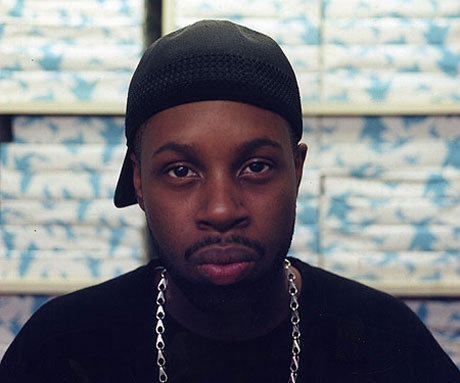
According to trusted sources and the occasional Wikipedia, James Dewitt Yancey (February 7, 1974 – February 10, 2006), also known by J Dilla and Jay Dee, was an American record producer who came up in the mid 90’s Detroit underground Hip Hop scene. Yancey died in 2006 of the blood disease Thrombotic Thrombocytopenic Purpura and "Lupus". His most famous album works include Champion Sound, a full length album of about 20 songs by the duo of Jaylib (J dilla and Madlib), and solo works Welcome 2 Detroit, Ruff Draft and Donuts.

Jay became a musical connoisseur before he could even help it; he wouldn't go to sleep without Jazz being put on the record player by his bed. When he finally reached High School in the mid 80's, Hip Hop was in full swing, an although his mother Maureen Yancey would have rather that he study physics, Dilla was out breaking down his spinning to a science. While still in high School, Dilla linked up with a Detroit artist by the name of Amp Fidler, and Amp was so impressed by Jay's work with his limited tools, he opened up his record collection to Dilla in order for him to work with some live instrumentation. Amp gave Dilla his first MPC and allowed to work with simple drum machines, a skill he faithfully mastered.

Dilla, though relatively unknown to the average listener while he was alive, was behind some very popular works in Hip Hop. He produced for artist like A Tribe Called Quest, De La Soul, Busta Rhymes, The Pharcyde, Common, Erykah Badu, The Roots and many others, all who have sung praise for this late and great producer and MC, for his work ethic, his love of music and his artistry.

I feel the word “artist” more adequately suits J Dilla than any other phrase, moniker or term that you might possibly throw out. Its as simple as that one word, artist. Many love to categorize him, on some but-would-you-call-him-the-best tip, I would call him my personal favorite, but then again I might be biased, there’s no telling just how intricately his productions have woven themselves into my everyday life. All I know is that if I’m going to write something, the first producer that comes to mind every single time is Dilla; and I’ll look through hours of Dilla productions, often coming to dead ends when I find a song with no instrumental track (exhibit A: Proof’s "Searchin’"), before reverting to another equally merited producer, but lacking in Jay’s mix of head-bob inducing drum loops, dope bass lines, vocal samples and obscure synths.  

Chocolate sprinkles, jelly filled or plain?
Versatility is Dilla's game; If you look through his discography, staring with the stuff he put out with Slum Village in '96 and ending with the album he put out his deathbed in '06, Donuts, J Dilla consistently re-defined his sound. Though he kept a relatively set of heavy drum loops throughout his career, he was always searching for a different, unexplored set of samples. This seems ridiculous to some artist, because to make it in the music industry most artist spend years crafting their specific sound, one so unmistakably unique to the artist that as soon as one of their songs are played, it is obvious who the song is by. Dilla chose not to feed into the manufacturing of a certain sound, in this he was alone. Much of his earlier work was on par with the boom-bap type beats seen on the streets of New York in the early 90's by groups like A Tribe Called Quest, The Beatnuts, and De La soul. Though it had Jay Dee's own soulful twist, the hard snare and kick can be heard very clearly in this joint, "The Look of Love" from Slum Village's first album Fan-Tas-Tic (Vol. 1) .


The similarity and  connection with Dilla's early style to these NY groups led to some heavy collaborations with them. In all reality, many claim some of Dilla's more poignant works came producing tracks for and with these Native Tongue groups like De La Soul and A Tribe Called Quest.

The collaborations started around 1994, after Q-Tip of Tribe had been introduced to Dilla by none other than Amp Findler. Q-Tip took such a liking to Jay Dee's raw talent and incredible ear that he had him sign on a collective label: The Ummah

Dilla, through The Ummah, was largely responsible for A Tribe Called Quest's 4th album Beats, Rhymes and Life and later Q-Tip's solo album, Amplified.


He was also linked to another Native Tongue group De La Soul, for whom he produced the track "Stakes is High" on their 1996 album Stakes is High .


On top of the works he produced with and for the Native Tongue groups, he collaborated heaviliy with Los Angeles based group The Pharcyde. J dilla was instrumental (ha ha) in the production of their second album Labcabincalifornia, of which one of their most well known songs, "Runnin'", is featured below.  


From 96 to the new millennium, Dilla took a much more jazzy approach to his music. When Dilla and Slum Village came out with their second album Fantastic (Vol. 2) (a personal favorite), in 2000, Dilla had already redefined his sound. He takes a much more slowed up tempo to many of the songs on the album, with an increased jazz presence and a much more complicated yet beautifully profound bassline that firmly takes hold of the proverbial spinal cord of the track. No doubt the hard snare and kick hold true, but accompanying them is a much more versatile artillery of melodies, piano rifts and powerful bass-lines. 

Half-Dozen Left
Even though throughout his production years under The Ummah, J Dilla came across a lot of unsung praise yet he continued to press on, working like a "mad scientist" as fellow producer and Dj, Dj Jazzy Jeff once called him. The label created almost a shroud over his accomplishments, the works were not accredited directly to Dilla, but instead on ink it was an Ummah prodcution.

Having your Donuts and eating them too.
After his second, and what would be his last major album with Slum Village for reasons unknown, Dilla gravitated to more individual works. Jay Dee had been an emcee as well as a producer for all of his time being involved with Hip Hop, yet the arrival of his first solo album Welcome 2 Detroit on the Label BBE pushed the envelope that Dilla could also really spit. His search for different samples took him in the direction of more electronic as well as some old funk. There is an unfiltered rawness about this whole album that just takes you by surprise. The lyrics take a mostly braggadocios, Im-better-than-you-in-every-way route, and features by promising artist like Elzhi and Ta'Raach make it bearable. For example,

Timeout for these niggas who ain't bringin' the real
I'ma flip a few guns let 'em see the steal
Ready to cock plus yo they ready to rip
The whole crew gets down they ain't ready for this

The production is, of course, incredibly dope and it overshadows the albums mediocre lyricsm, though Dilla does earn some stripes, the way that he rides his own beats with his unique flow really parallel his unique production style and eccentricity as beatmaker in general. 

Following Welcome 2 detroit came Dilla's second solo album, Ruff Draft in 2003. Ruff Draft symbolized J dilla's temporary break with the corporate aspect of his music. After trouble with his label follwoing Welcome 2 Detroit, Dilla spent two or so years brewing some rather intense feelings against the industry and Ruff Draft became the canvas on which he chose to funnel his musical artistry. He distributed the album through a european vinyl distributor, so on top of the raw feel of the album, it came in very short supply; it seemingly came as the antithesis to popular, commercially backed music. The whole album points to deeper symbolisms that Jay Dee was trying to bring light to. 

"Make Em NV" (favorite track off Ruff Draft)


Not yet full
The very same year that Ruff Draft dropped, came one of Dilla's defining works, Champion Sound. Champion Sound was a collaboration with underground-favorite, producer and emcee, Madlib of Lootpack
Around 2000,when Madlib came across one of dillas tapes, he recorded some unofcial tracks on them. One of the songs was leaked and when Dilla caught wind, he approached Madlib, leading to their collaboration.

The two incredibly original production types came together almost harmoniously. Dilla's heavy drum loops and slightly abstract basslines doubled with Madlib's perfectly off-beat and amorphous layered samples play well off each other. With Dilla rhyming on Madlib's beats and vice versa, each emcees' respective flow does just fine. The lyricsm isnt incredibly profound, but what it lacked in content it made up in the fact that they were just doin' their own thing. It doesnt cater to the populous, but instead is just abstract enough that it appeals to the backpacker crowds and eventually spreads. The production really does carry most the weight in this relationship, and that would probably be my only slight disapointment with the album. 

"The Red" (One of my favorites off this album)


Most would agree that Champion Sound was not a breakthrough album. The idea in theory of the two powerhouse producers coming together is like a Hip hop heads ongoing fantasy since they first hear a beat break. And if you were just looking at the production aspect you probably would be as content as can be; but if you were looking at it all, disapointment would have ensued after evaluation of the lyriscm. This album could have been great, but instead it was just really, really good.


Last Donut of The Night 
Dilla's last and arguably greatest work came three years after Champion Sound. Donuts was an album J Dilla practically recorded on his deathbed, while recieving treatment for two diseases: TTP and Lupus. Part of it was the three past years of which Dilla spent recording singles under Stones Throw and working with artist like Common and De La Soul, the oher part of it was Dilla's on going struggle to physically stay alive. The mood of the album is also largely influenced by Dilla's continual against-the-grain mentality; perpetuating a style that is fueled by a desire to reach a crowd that is not necessarily buying in to the mainstream. 

The album has an eerie feel, mostly due to the fact that it was released six days before his passing. Many feel that Donuts, the name inspired by the boxes of them James Yancey used to bring back late at night after working in the studio in Detroit, were Dilla's last words. Before he died, Jay Dee was often just too weak to muster the ability to talk, so the album, one filled with choppy voice samples, is seen by many as Jay's dying words. The voice samples act as the lyrics of this album; an otherwise strictly instrumental album. 

"Bye" and "Dont Cry" are two perfect examples of the sharp voice samples that narrate the album when Dilla was too frail to speak for himself. "Bye" samples the Isley Brothers "Dont Say Goodnight", and the "Bye babyyy" spread amongst the album symbolize a near end to the album, as well as a near end to Jay's life. "Don't cry" samples The Escort's "I Can't Stand (To See You Cry)", and was most likely made for his mother, with whom Dilla had a very strong relationship. The slowed down melody right around when Jay throws in that "I caaan't staaand...to see you cryyy" puts an increased focus that those aren't just any words; Dilla didn't chose that sample just because it sounded good, he did it because there was an alternate mmessage he was trying to convey. He knew he was soon to go, but he wanted to be celebrated not mourned. 

My favorite track on the album is Two Can Win. Much like the rest of the album, it heavily samples soul and is under two minutes long. The feeling I get when I listen to this song is euphoric and its the one track that just scream to be recorded on. For that reason, its my top choice on my top artist's top album. So i guess you could say I kind of like it.


Jay Stay Paid...
Like it is for most overlooked artist, when Dilla died, his popularity increased. Though he'd always been known, loved and respected within the Hip Hop community, the end of his life spelled a quest for his music as many sought to find who Dilla was. 

Many fell in love with his music and he amassed quite a following. Claims of "Dilla changed my life" on Jay's videos, and constant quests for unheard or unexplored Dilla productions seem to characterize most Dilla-heads. For this reason, posthumous albums like The Shining and a re-release of Ruff Draft have come about, to satisfy the fans that have accrued after his passing. 


Praise  

Common

Busta Rhymes 

?uestlove

Pete Rock